Verification: d5481ecdec69b358

Tuesday, March 31, 2020

How do the search engines work

Discovery Mosti


How do the search engines work

Search engines are a pretty complicated system. The way you need to look at there are a network of stops for it to hit before it can provide the user with the right information. There are billions of websites out there and a search engines job is to choose which sites will be on the search engine(indexed) and when to show the results based on the keywords that the user has put in. 

Spider/Crawlers 

These are 'bots' that search engines use to scan through the world wide web looking for new websites and pages to add to their database. For spiders to do this successfully it's really important the websites are easily crawlable. Sites with broken links, bad URL structures etc can cause spiders to miss out and your pages might not end up on the search engines.

What the spiders will also do is check the contents of the page to see if it's suitable to appear on the search engine and also what kind of keywords it will show for.

Keywords

To use a search engine, you enter a keyword into the search bar and it will provide you with a list of results. How a search engine determines what it shows you are a complicated process. The first process is the when it thinks about relevance. The search engines have to crawl your website. This is the search engines analysing your page to see if it's suitable to show. 

For example, say you have a piece of content on your site that is talking about a certain jacket. If that is made clear throughout the page then the search engine can crawl the page, see what the page is about and decide firstly if it's going to index the page and secondly, how high on the search results it will appear for the keyword 'jackets' and any other keywords related. 

Rules & Guidelines

Every search engine out there has certain guidelines that they need every website to follow. As you know there are obviously certain things out there on the internet that are illegal etc and should not be made easily accessible by a search engine. There are also people who use certain spamming techniques to try and trick the search engine into providing people with there website above others when it isn't really justified. It's really worthwhile reading into the guidelines of any search engines that you want to rank a website on so you get a better understanding of what they are looking for from you.

How do the search engines work? So, much-asked question by everyone. No one knows exactly how the algorithm works or anything like that, but you see people googling how do the search engines work? People see using the three-step process. There are lots of different search engines out there, Google being the main one.

Basically if you look at this, it will tell you the crawl and index and the algorithm are how it all works. What I want to do is talk about a few of those things and how things work. Obviously, your website has to be built properly, first and foremost. You have to have a website that Google can crawl, index, and the bot can go in and out and check out what you're doing and crawl and index your pages. So you've got bots or Google bot, if you like, if you're asking the question of how Google works. Different search engines, and even search engine optimization tools such as SEMrush or Ahrefs. They all have bots which crawl websites and obviously check out the pages, crawl all the content, energies and everything else that's on there.

That is essentially what Google do, the bot goes about looking at websites. The first part is web crawling. So that's one thing, so you hear people mentioning that the bot, spider or whatever, crawler, it's the same thing. What we have is a tool called Google search console. It's wise to install Google search console first and foremost purely ... well, not purely because it does a lot of different things. But you know, if you want to see how Google's crawling your website, what it's indexing, if there are any problems, then the search console can give you all that information.

So as I said, Google you want to crawl, and then what it should do is index the pages within your website. Now, crawling is one thing. Allowing Google to crawl your website is one thing. Getting the context indexed is another. Quite a common problem is people who copy and paste content. Now, if you copy and paste content from another website, or a supplier's list or whatever it may be, and put it on your own website, the chances of that page being indexed are slim depending how much of it you copied.

So that's where you can go into your search console and you can see how many pages are indexed. You can also see how many pages are excluded. You know, and the certain things within a website that you would want to exclude from Google's index such as search photos and various other certain things. So for eCommerce websites you want to make sure that those pages are not indexed or products that'll get maybe the description, you know, varying sizes of products.

So for example, for this black shoes, you may want the black shoes page to be crawled and indexed, but you know, you might ... if the content's gonna be the same on various other aspects of that shoe, other variants of the products, then you're gonna get penalized for duplicate content so you might not want all the kind of product variations indexed. So if it's black shoes and they come in a size six, seven, eight, nine, ten, then you might not necessarily want six, seven, eight, nine, ten indexed. You know, having one of those pages indexed is more than enough. Then obviously the customer can select the size they want. But in terms of Google you would maybe want to filter out some of those product variations.

But as I said, the search console will allow you to see what's indexed, see if there's any problems on there. But in terms of duplicate content, there's a tool out there called Copyscape.com and you can easily run your website through here by sticking in your domain name. What would happen is state your domain name, and what Copyscape will do is show you other pages that have similar content on the website. So you can see here, someone's clearly taking content from Amazon's website for this 100 [Days of Food 00:04:42].com. That's what not to do if you want to rank well.

So the [inaudible 00:04:49] Google is clever. It can obviously filter out duplicate content and it basically throws it in the bin if you want to use layman's terms. So that is how search engines work. They crawl, then index, then obviously that algorithm and whatever else they're looking for will be taken into play. And if you, first of all, get crawled and indexed, you've got a chance of ranking. Whether that's on page one or page ten, you've got a chance of ranking well. But obviously, they are gonna take other things into consideration. It is very unlikely that you'll rank well on content alone unless it's a very, very niche market you're working in or some non-competitive local area.

So that's how search engines basically work in layman's terms. Obviously the mechanics and everything else that goes in behind Google servers, you know, it's a lot more complex. If you want to understand how all that works I'm sure there are core, seasoned people you can talk to such as Don Anderson and various other tech SEO's who are completely obsessive about how these search engines work and do a lot of research on all that kind of stuff [inaudible 00:05:59] trying to get to the bottom of it. So they're super smart people and these guys are [inaudible 00:06:08] technical stuff. But that is how the search engines work in layman's terms.

So the crawling, the indexing, and then getting your website ranked is the key part. But Google search console is something you do definitely want to install from the get go. You can have an overview of your website, performance. It does give you a whole heap of other stuff there as well, such as if you've got manual action taken against you. Mobile usability, if you've got Site maps, and various other things as well. So you can see my site map here, when Google last read it, all that kind of stuff.

There's a whole heap of other stuff in here that you can have a look at, and what should allow you to get much more performance out of your website. And obviously it will flag up certain errors and stuff as well, so you always want to make sure your website's error-free, so make sure that you do have a look at that, and as I say, that is pretty much how the search engines work in layman's terms.
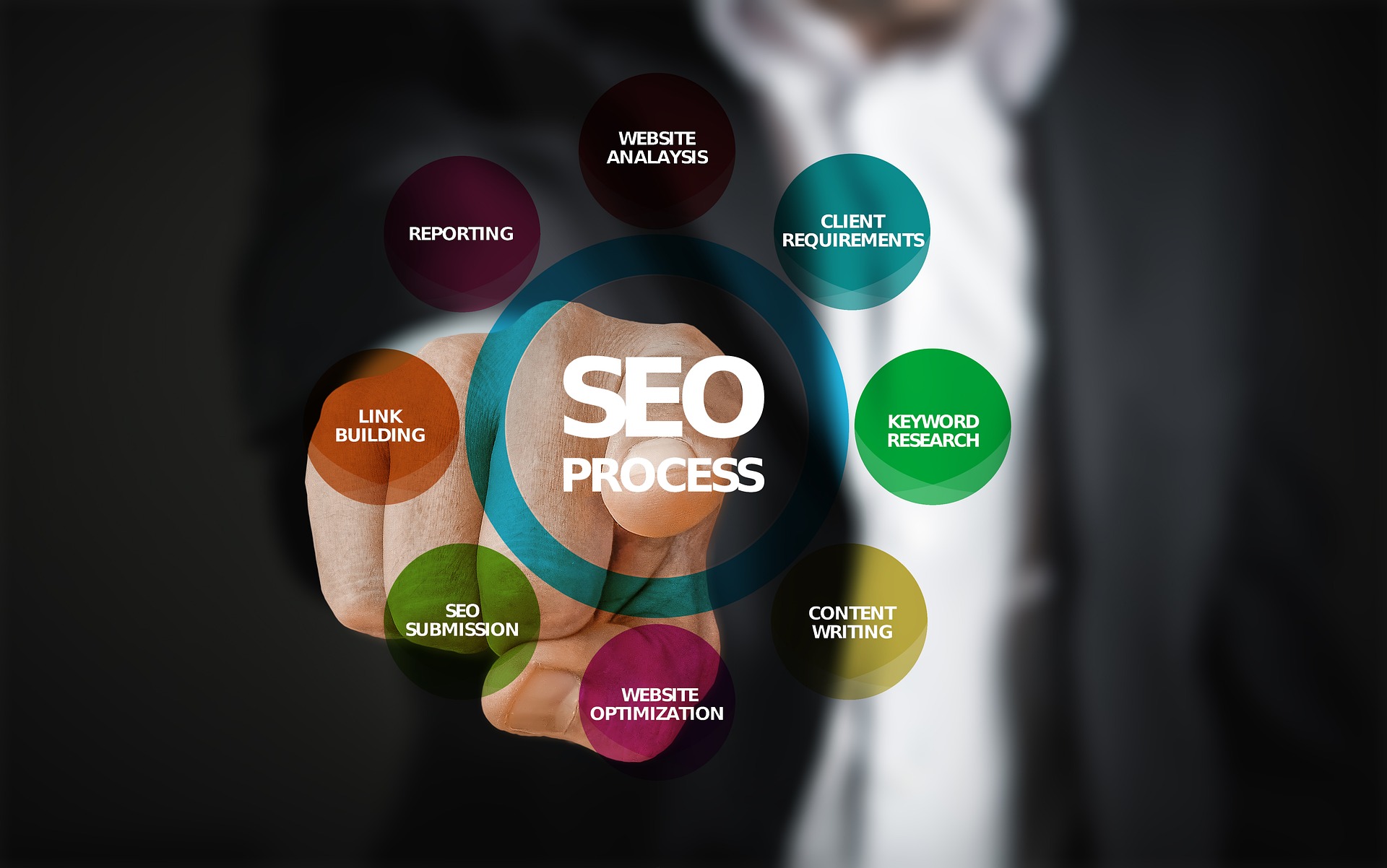
What is SEO?

Discovery Mosti


What is SEO?

SEO or Search Engine Optimisation is the process of ranking websites higher within the search engines. There are lots of different search engines out with the main ones being Google, Bing and Yahoo. While some people do use the others you really want to be ranking on Google. Statistics show that over 65% of people use Google as their primary search engine so ranking on there will provide you with the most traffic.

It's also important to note is that different search engines have their own ranking factors, this essentially means that ranking well on one search engine doesn't mean you'll rank on the others. These search engines use different factors to rank a website so it is important that as part of any SEO Strategy you take multiple search engines ranking factors into consideration.

What is an algorithm?

The algorithm is the science behind how the search engines rank your website, Google uses over 200 different variables on how they rank a website. Each variable is weighted and SEO’s will tweak websites to suit these requirements, however Google regularly change their Algorithm to make sure that people who try and use software to do SEO automatically cannot exploit the system.

Ideally, you will try and optimise your website to a very high standard and be strong on many of the variables so that when Google does an update you are less likely to feel the effects of such changes. Recent years ( April 2012 ) was the start of it. Google released what is known as the Penguin update which targeted spammers and those who use link building software and millions of websites were affected. Since then there has been a range of Panda and Penguin updates which make SEO more difficult for those who look to take shortcuts. 

Even now in 2018 Google are always on the lookout for websites to take down so that when the general public Google something they get a good quality relevant website for the search term they type in.

SEO Tools and Software

There is SEO software out there which you can buy and this will do some of the boring SEO work for you, things such as directory submissions and link building can be done at the push of a button.

Many SEO companies try and use software to carry out some tasks, our advice is to steer clear of any software because as tempting as it may be your SEO efforts will suffer by using tactics like these. Search Engine Optimisation has been around for a while, Google is well aware of spamming techniques and is smart enough to counteract any cheating as it were. Don't get me wrong there will always be smart people out there creating tools that can cheat the system and yes these may work for a little while, however, Google will eventually penalise you and all of your rankings could come crashing down. Search engine optimisation only works best when done manually and naturally by a professional SEO with experience and reliable resources. 

One of the problems many people face is being led down the wrong path. You will see that there are loads of different people out there telling you how SEO works and the reality is there isn't one set way that SEO works. On top of this, there are loads of ways SEO doesn't work but there is so much material out there telling you it does. Everything I show you in this course is a proven strategy that has worked for me and if you follow these steps and procedures then you will be able to rank websites. 

The terms used for these SEO Tactics are: White Hat SEO, Black Hat SEO, Grey Hat SEO.

White Hat SEO

Well as we explained this is the tactic we recommend you use as all others will lead to you being found out eventually and suffering a dip in rankings or even being banned by Google. A white hat SEO carries out all SEO work manually and uses ethical tactics only, this will result in good rankings and no potential danger or penalties. Those of you who know me know that I don't 100% believe this is the best tactic to use. Now I'm not against white hat procedures at all, my concerns are for the businesses and niches that don't quite have the budgets for massive advertising campaigns or have a captivating piece of content to write. That is where other techniques may have to be implemented into the SEO campaign.

Black Hat SEO

This is a tactic used by SEO’s where they use software to carry out tasks such as link building and directory submissions. Other Black hat tactics are Doorway Pages, Hidden text, keyword stuffing and link rings etc. Doorway pages are simply buying a domain name which links to your main website, for example you could sell cars and your main website is www.cars.com. You could buy other domains such as www.cheapcars.com and have a single page website linking back to www.cars.com, this tactic is now frowned upon by Google. 

Hidden Text is another tactic that worked years ago, people would add white text onto a website with a white background and mention the keywords over and over again as it wouldn’t be visible to the human eye. Having keywords on your page is an important ranking factor that has been abused by people over the years so if you decide to use hidden text then you could potentially get your website into trouble. 

A popular topic that you may have heard me discuss is PBN's (private blog networks). These are a big list of sites within your control that you can link out to any websites of your choice. I won't go into too much detail about this right now but it's something that a lot of SEO's will use to help rank a website.  

Grey Hat SEO. 

Grey Hat SEO is just a mixture of white hat and black hat techniques. Like I mentioned previously there isn't one set way to rank a website, some niches require more work than others, some won't need any black hat methods to rank well and others may rely on it heavily. Grey hat is an SEO tactic that implements any technique that is required and if done correctly can ultimately rank your website high on the search engines. 

Video Transcription

The first video is about what is SEO. SEO is search engine optimization. I'm sure many of you know that anyway if you bought the course. But for those of you don't know what it is, search engine optimization is a technique, a skill that people use to rank websites organically online. So forget about all your paid stuff, your social media, and everything else. The organic search engine rankings are what SEO is. And obviously, there's a wide range of definite things that you can do to make a website rank.

And throughout the duration of the course, there are different modules which will go into all the different aspects of what actually gets a website to rank well. But with search engine optimization it's not about one thing. There are lots of different things. Google will tell you that there are over 200 variables that constitute a website being ranked. As for 200 variables, there probably is if you wanted to count them all up, but the main variables are things like site speeds, click-through rate, content on your website, link building, technical issues. The certain parts of the technical side of your website that need to be tweaked and fine-tuned to make sure that your website is doing what it has to, and loads within the optimal amount of time. You've got guys that analyze servers logs. There's real guys out there doing some real weird and wonderful stuff to try and get their own websites the competitive advantage over the next guy's.

Back in the day, there were people out there who had websites that were just flung together, had the back content on, a nice video and a 'buy now' button. At some point, I'm sure that was enough to rank well and make some money online. But Google wants to, obviously, refine the websites that it shows on page one. They have to look at the technical aspects, site speed, the content. Is the content on there really for what people are searching? The link-building side, you've got good quality relevant links now whereas back in the day, again, it was just sheer volume and spam.

Obviously, with the volume of websites and web pages that are flung out there on a daily basis, and I'm not sure exactly what the stats are, but there are literally millions of websites getting put up on a daily basis. Google somehow has to be able to filter out some of the garbage that's out there. At the end of the day, that's what SEO is. It's always evolving and changing. Google releases updates. They'll look at different things or look for different things, and it's up to yourself to keep on top of the most recent updates. When you start learning this, it can be very difficult to get a grasp on everything that is required to rank well, which is why you've got to do it step by step and probably not follow that many people.

There are loads of guys out there who claim to be good at SEO who are potentially using dated tactics or whatever. Some of the guys that are on the speaking circuit and whatnot don't even do SEO on a regular basis anymore, they're just very good at talking, were good at SEO back in the day, and probably have guys in the office that do it. But do these guys keep on top of it? Absolutely not.

I'm not saying that's the case for every speaker out there, just you've got to do your research in who you follow or who you want to listen to in order to rank well. I would always say back when I was learning, I used to follow a huge amount of people. Some were talking bullshit, some weren't. That confused me a lot, so in the end, I had to follow a select few guys after doing more research, checking what they were saying out, trying my own stuff out, doing my own testing. Then I started to find my feet.

You have to do your own testing, but as for SEO is, that is essentially what SEO is. Obviously, this course is designed to go through all the different aspects of SEO that are required to be done in order for you to rank a website. Just follow this as a step-by-step guide, and hopefully the end of it, you'll have a much firmer grasp on what SEO is.

That is the definition of what SEO is, but how it all pulls together, that's what the rest of the modules are all about.

Sunday, March 29, 2020

Google Adsense

Discovery Mosti

5 Best Google AdSense Account Approval Tricks

Getting account approval from Google AdSense is one of major issue among bloggers & internet marketers (oh yes for spammers too!) in India, Pakistan, China & other countries. Google is becoming more & more stricter related to the AdSense account approval & so people are not getting their account approved.
One of the biggest problem comes when Google says, your domain must be 6 months old to apply for AdSense. They have other guidelines as well which you can access here.
Although you will find many websites, who are selling AdSense account but most of these sites are fake. Many of them create the account through some illegitimate way & once you receive the account from such people, there is a big chance, it will be deactivated in next few days.
But you don’t need to worry. If you are a genuine person who own a decent website with good traffic (I mean genuine traffic), then there is a way out to get your application approved from Google AdSense.Google Adsense Account Approval TricksI am explaining here some of the AdSense approval tricks which work most of the time. Try one or other & I am sure, you will have your AdSense account in next few days.


Top 5 Tricks for AdSense Account Approval

Let’s check all the 5 tricks one by one for getting your AdSense account approved from Google.

1. Create a Better Website

One of the best & highly recommended way is to create a good website. If you get the approval & no one visiting your website, then there is no meaning to your AdSense account. It won’t give you any earnings.

You need to publish high quality contents on your website if you are looking to monetize your contents. People visit your website for your contents & not to make you money. If you provide them with good contents, your visitors will love them, share them & make a return visit for the new contents.


One of the best idea is, create your website on WordPress platform. If you already own a website, you must know what is WordPress. More than 25% website are created on WordPress only. Create a better WordPress blog with regular updated contents, design it properly with sitemap & navigation & then submit it on Google AdSense. I am sure, you don’t need to use other tricks mentioned here for approval.

2. Buy an Old Domain

As I told you, you need to have a 6 month old domain in order to apply for AdSense account, you can buy an old or expired domain through various domain auction sites like GoDaddySedo or NameCheap.
You can buy an expired domain for as low as $5. Then you can build a good WordPress blog on that domain, publish good contents on regular basis & then apply for AdSense account. This is another best tip to get your AdSense approval.

3. Apply with BlogSpot blog

Initially when Google started to decline AdSense application for new domain, BlogSpot was the sure shot way of taking approval from Google AdSense. Create a blog, write 1-2 post, apply for AdSense account & take approval but its no more the case.
Now Google is taking seriously all applications that comes through BlogSpot blog but still there is a trick for this. But you have to shell out around $10 for this. Its better than taking a fake AdSense account for $20 or more from AdSense account seller.
All you have to do is create a BlogSpot blog & buy a domain from blogger to use it for your blog. Now your BlogSpot URL will be https://www.yourdomain.com instead of https://yourname.blogspot.com. Now publish some good 5-7 articles & then submit your website for AdSense account.
If you buy a domain name from Blogger.com then you don’t have to do any settings to use your domain with BlogSpot but if you are already have domain or buy it from outside then you have follow the guidelines mentioned here to point that domain to BlogSpot blog.
With Blogger, you have to pay $10 or more but if you buy from other service provider like GoDaddy, you can buy it for less than $5 for ‘.info’ domain or by using some discount coupons.
This tricks works most of the time but if you don’t get approval in first attempt then write some more useful articles & then apply. I am sure, you will get approval in few attempts.

4. Revenue Sharing Websites

Revenue sharing website are best trick to get approval from Google AdSense. All you have to do is register an account with a revenue sharing website & upload high quality articles on these website. You can use site like HubPages to write the contents. These are high authority sites in Google’s eyes & if you write some quality stuffs, your sites will also receive traffic. After sometime, you can apply for AdSense account & there is a great chance, you will get the approval in first attempt.

5. Use Fiverr Service

This is not recommended but this one is also a trick for AdSense account approval. Many people sell AdSense account on Fiverr for just $5.
Many of them use the same technique as I mentioned about the fake account seller in the beginning but there is some difference between those & Fiverr sellers.
The charges those AdSense account sellers ask are very high & you will not find any review from the genuine customers. If there are any testimonials on the website, that might be fake. But in Fiverr, you will get the service in just $5 & the review Fiverr sellers receive, are from the real customers only.
I don’t want to recommend any Fiverr seller here. Just visit Fiverr & search with keywords like ‘AdSense account’ or ‘Google AdSense approval’ & you will find many sellers. Once you find the results, click on ‘Rating’ tab so that sellers will be sorted with highest rating first. I hope you get a genuine account this way.
So these are some of the best tricks for Google AdSense account approval. I don’t think, you will not get approval by using these tricks. Try them today!
I am a an old internet marketer & 6 year old AdSense publisher. I am making good money through AdSense & affiliate marketing. AdSense approval is one of smallest part in AdSense earnings. There are many secrets that you need to know about Google AdSense & of-course blogging.
People who make big money through AdSense never share such secrets. I conduct training in Google AdSense in Mumbai. You can visit this training link in case you need a successful training to make money from AdSense.
Share your thoughts & comments on how you think on these Google AdSense approval tricks & what you recommend to others for this.

Coronavirus (COVID-19) map live worldwide

Discovery Mosti

Coronavirus (COVID-19) map
Statistics
Location
Confirmed
Cases per 1 million people
Recovered
Deaths
Worldwide663,74894.2142,18430,880
United States124,697381.243,2312,227
Italy92,4721,463.9712,38410,023
China81,43959.375,4483,300
Spain73,2351,477.9912,2855,982
Germany58,137707.814,227479
France37,611556.655,7002,314
Iran35,408437.1811,6792,517
United Kingdom17,136264.061401,028
Switzerland14,1082,079.291,595271
Netherlands9,819602.980640
South Korea9,583187.765,033152
Belgium9,134886.181,063353
Austria8,2911,058.0722568
Turkey7,40288.4370108
Canada5,607162.2747961
Portugal5,170484.2343100
Norway4,032756.63023
Australia3,964173.1822416
Brazil3,90418.946111
Israel3,619317.378912
Sweden3,460344.2118112
Czechia2,663250.051111
Ireland2,415462.36536
Denmark2,366426.38065
Malaysia2,32069.8232027
Chile1,909109.22616
Luxembourg1,8312,287.084018
Ecuador1,823110.12348
Japan1,69313.3540452
Poland1,63844.062120
Pakistan1,4957.442512
Romania1,45267.6413937
Thailand1,38820.721117
Russia1,2648.83494
Saudi Arabia1,20342.55374
South Africa1,18721.4311
Finland1,163214.32109
Indonesia1,1554.4359102
Philippines1,07510.313568
Greece1,06198.445232
India1,0240.818524
Iceland9632,849.211142
Panama901244.49417
Singapore802171.441983
Dominican Republic71967.85328
Mexico7175.69412
Argentina69015.195117
Slovenia684390.1109
Peru67121.41616
Serbia65981.724210
Croatia657140.2495
Estonia640500.24201
Colombia60812.86106
Qatar590255.35451
Hong Kong58256.611124
Egypt5765.7512136
Iraq50612.3913142
Bahrain476340.242654
New Zealand476106.2561
United Arab Emirates46889.16552
Algeria45410.962929
Lebanon41266.36278
Armenia407161.9301
Lithuania394132.0817
Morocco35910.681124
Ukraine3568.359
Hungary34334.273411
Bulgaria33149.62117
Andorra3084,043.2253
Latvia305162.510
Costa Rica29558.5332
Slovakia29248.6770
Taiwan28311.86302
Tunisia27824.728
Uruguay27484.300
Bosnia and Herzegovina26279.9855
Jordan24628.02181
North Macedonia241116.0334
Kuwait23583.09640
Kazakhstan22811.72161
San Marino2236,687.86621
Burkina Faso20710.692111
Albania19765.623310
Moldova18847.8832
Azerbaijan18217.33154
Vietnam1791.83210
Cyprus162131.12155
Oman15236.11230
Malta149352.3220
Ghana1414.9225
Senegal1308.73180
Brunei120348.29251
Cuba11910.6843
Sri Lanka1135.0491
Venezuela1133.58392
Afghanistan1103.2824
Uzbekistan1043.8402
Cambodia1036.57210
Mauritius10274.9602
Côte d'Ivoire1014.2530
Puerto Rico10023
Nigeria970.531
Palestine9719.2181
Honduras9510.3502
Belarus949.74320
Cameroon913.7322
Georgia9019160
Kosovo8850.9911
Montenegro82136.9201
Bolivia746.6700
Trinidad and Tobago7460.812
Democratic Republic of the Congo650.7426
Jersey61595.6201
Northern Cyprus61187.12291
Rwanda605.2600
Kyrgyzstan587.9800
Liechtenstein56542.0900
Paraguay568.0753
Bangladesh480.29115
Monaco421,096.6110
Guernsey39614.7600
Kenya380.7811
Macao3766.58100
Guatemala342.31101
Isle of Man32363.900
Jamaica3010.0121
Uganda300.8200
Zambia281.8400
Barbados2689.3500
Madagascar261.0400
Togo253.0710
El Salvador192.9500
Mali1800
Ethiopia160.1500
Maldives1641.36110
Tanzania140.2500
Djibouti1215.5600
Equatorial Guinea1217.5600
Mongolia124.0600
Dominica1100
Niger100.5801
The Bahamas1030.2800
Eswatini97.9200
Guinea80.6510
Guyana811.0801
Haiti80.7400
Laos800
Mozambique800
Myanmar (Burma)800
Namibia83.820
Seychelles882.8800
Suriname813.9200
Gabon73.601
Grenada700
Zimbabwe70.501
Benin60.6200
Eritrea60.9300
Vatican City600
Fiji55.4100
Mauritania51.5600
Nepal50.1310
Sudan50.1301
Syria500
Angola40.1400
Cape Verde47.1401
Nicaragua40.6801
Republic of the Congo41.1700
Antigua and Barbuda331.5700
Bhutan35.4800
Central African Republic30.5800
Chad30.2400
Liberia30.5400
Libya300
Saint Lucia318.0100
Somalia30.2900
The Gambia31.2901
Belize200
Guinea-Bissau200
Saint Kitts and Nevis200
Papua New Guinea10.1400
Saint Vincent and the Grenadines19.9700
Timor-Leste100
About this data
It changes rapidly
This data changes rapidly, so what’s shown may be out of date. Table totals may not always represent an accurate sum. Information about reported cases is also available on the World Health Organisation site.
It doesn’t include all cases
Confirmed cases aren’t all cases. They only include people who tested positive. Testing rules and availability vary by country.